Linen, Cotton and Wool: What Changes When You Wear Them
Compare linen, cotton and wool by texture, drape and movement, so you can choose a garment that suits your comfort, setting and everyday habits.
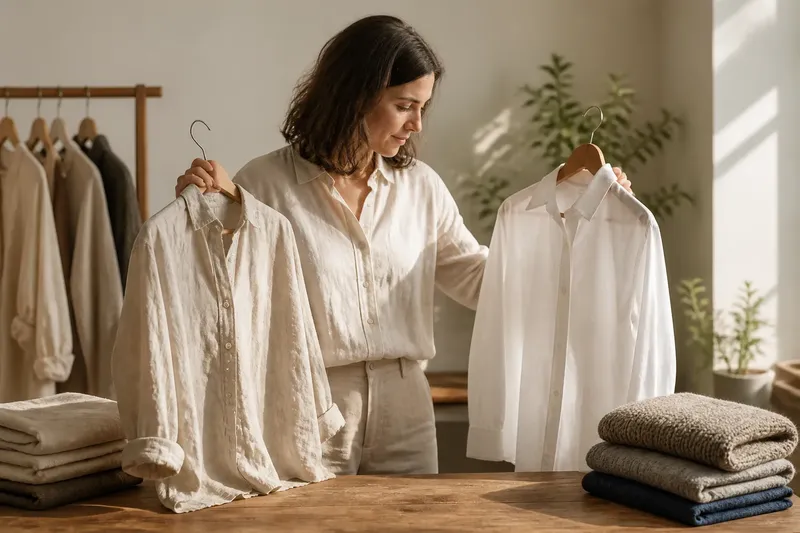
You pull a linen shirt from the wardrobe on a warm morning, then reach for a cotton one beside it. The labels name different fibres, but their actual feel depends just as much on the cloth and cut: a crisp woven cotton shirt may stand away from the body, while a soft jersey one follows it. Understanding how linen, cotton and wool behave helps you choose a garment for the way you dress, without crowning a universal winner.
Linen often gives folds a clear outline
Linen is made from flax fibres. In a shirt or loose pair of trousers, it may have a dry, slightly crisp hand, but its drape is not set by fibre alone. Yarn, weave, thickness, finishing and fit all shape whether a particular garment hangs softly or holds a more definite line.
Movement can leave visible creases, especially in lighter cloth or in areas that bend often. That is part of linen’s familiar appearance, not proof that the garment has been neglected. Some people enjoy the softened, lived-in surface; others prefer a fabric that keeps a neater outline.
Linen can feel cool and textured against the skin, though finishes and cloth density alter the sensation. If a rough surface bothers you, check the fabric against your neck or inner arm rather than judging it on a hanger. A softly finished shirt may feel more comfortable than a crisp, structured one.
For warm-weather clothing, a loose linen shirt or roomy dress can leave space for air around the body. If you want a tidier look, consider the specific weave and cut: a denser cloth or a shape with fewer tight bends may show less pronounced creasing than a very light, close-fitting piece.
Cotton changes character with its construction
Cotton can feel smooth and crisp in poplin, soft and warm in brushed flannel, stretchy in jersey, or firm in denim. The fibre is only a starting point; yarn, knit or weave, thickness, finishing and garment shape influence the feel and movement you notice.
A jersey T-shirt usually moves differently from a woven cotton shirt, while a cotton skirt may hang softly or hold a clearer outline according to its cloth and cut. To get a better sense of a garment, inspect its surface, let a section rest over your hand, and notice whether it stretches gently or stays firm.
Cotton may feel familiar against the skin, but comfort is not automatic. A stiff new shirt can soften with wear, while a close cut in a cloth with little give may feel restrictive. Seams and garment shape matter too; a pleasant-feeling fabric on its own cannot tell you how a piece will feel through a day of movement.
For a sharper appearance, a pressed poplin shirt may suit better than a jersey top. Brushed cotton has a cosier surface. Choose the particular cloth for the job instead of assuming all cotton garments share the same character.
Wool combines varied surfaces with a springy feel
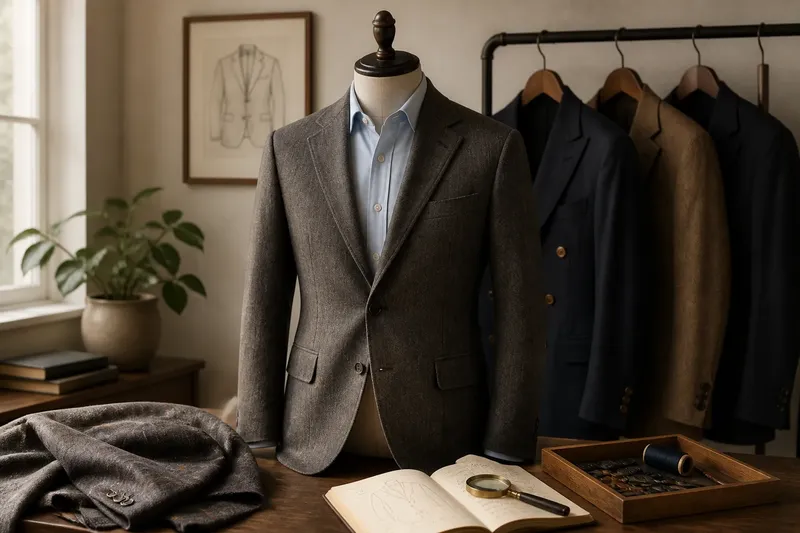
Wool fibres have a springy quality, but how that translates into a garment depends on its yarn and construction. A knitted jumper may stretch with movement and recover its shape, while a woven wool jacket may hold a more defined line. Fine merino knits and lofty wool jumpers, for instance, need not feel alike.
Wool surfaces range from smooth and fine to fuzzy or textured. Some people find fine wool comfortable next to the skin; others notice a prickly sensation. Try the garment against a sensitive area if you are unsure. A lining, shirt or base layer can change how it feels, while adding another layer to the outfit.
Wool may feel warm without looking bulky, particularly in a fine knit or tailored cloth. Its comfort also depends on activity and setting: a jumper that feels pleasant outdoors may feel too warm in a heated room. The weave and finish shape its appearance too, from a smooth coat to a textured knit.
Compare the fibres through ordinary movements
These broad tendencies can help you compare garments, but they are not rules. Look at the actual cloth and consider how its construction and fit affect what happens when you wear it.
- When you sit: If a linen garment develops folds where it bends, decide whether you like that relaxed look; if not, consider a different cloth or a cut with fewer tight bends.
- When you reach: If a woven linen or cotton piece pulls across your back, look for a roomier cut or a knitted fabric; if it moves comfortably, it may suit your usual activities.
- When you layer: If the outfit feels too warm indoors, remove a layer or choose a lighter garment; if it feels comfortable in both settings, the combination may suit your day.
- When you want a smooth outline: If the cloth keeps a crisp line during movement, it may suit a neater look; if it shows folds you dislike, try another construction or cut.
- When you want a soft surface: If brushed cotton or a particular wool knit feels pleasant against your skin, it may suit close wear; if a textured linen feels irritating, choose a smoother finish or wear a layer beneath it.
- When you check stretch: If the cloth gives gently and returns without feeling strained, it may suit reaching and bending; if it resists or stays pulled, look for more ease in the cut or fabric.
Say you need one shirt for a warm commute followed by desk work and meetings. Imagine your starting point is a preference for air around the body, alongside a wish to look fairly neat at the desk. First, compare a loose linen shirt with a cotton poplin shirt by trying each on and sitting, reaching and standing. If the linen feels pleasant but its folds bother you, choose the poplin; if the poplin feels too stiff or restrictive, choose the linen and accept its relaxed creases. The result is a decision based on your stated trade-off, not a claim that one fibre always performs better.
Choose by the garment in front of you
When comparing two pieces, handle them as well as reading their labels. Let each drape over your hand and notice whether it forms a soft curve or holds a firmer shape. Rub a small area between your fingers to sense smoothness, crispness or fuzz. Gently pull the cloth across its width and release it; observe whether it gives and settles back or resists the movement.
Try the garment on and move naturally. Sit, reach forward and lift your arms. Notice whether the cloth pulls across your back, bunches at the waist or settles comfortably when you lower your arms. Check the silhouette from the side as well as the front: a garment that hangs neatly on a hanger may move differently on your body.
Care preferences belong in the choice too. Check the garment’s label and maker’s instructions, since fibre names alone do not tell you how that particular piece should be cared for. If you prefer a crisp appearance, visible linen creases may frustrate you. If you dislike a close or fuzzy surface, some cotton or wool constructions may not feel pleasant, whatever the fibre label says.
For a useful linen, cotton and wool comparison, focus on the fabric’s surface, how it moves with you and the settings where you expect to wear it. The label identifies the fibre; trying the garment reveals whether its particular cloth and cut suit your day.
What do readers ask about linen, cotton and wool?
Which fibre usually feels coolest against the skin?
Linen often feels cool and dry, but weave, thickness, fit and surroundings all affect comfort. A light, loose cotton garment may feel cooler to you than a dense linen one.
Does wool always feel itchy?
No. Wool textures vary, and people differ in what they notice against their skin. Try the specific garment; a layer underneath may help if you like the piece otherwise.
Which fabric shows the fewest creases?
The fibre name alone cannot settle that. A firm cotton weave or springy wool fabric may keep a neater line than lightweight linen, but construction and fit can change what you see.
Can a garment blend these fibres?
Yes. Blends use different fibres and constructions to create their own balance of texture, drape and stretch. Read the full label and assess the cloth itself rather than assuming it will behave like one component fibre.
When choosing linen, cotton or wool, look at the garment in motion as well as on the hanger. Its folds, surface and response to your reach are more useful clues than a fibre name in isolation.