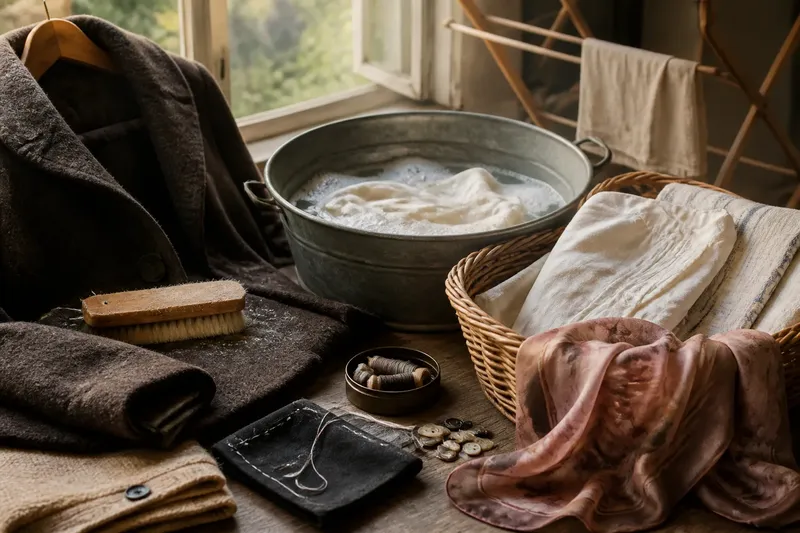
A Seasonal Wardrobe Check-In for Clothes You Wear on Repeat
A seasonal wardrobe check-in helps you prepare regular favourites for changing weather, spot repairs and store off-season clothes where they stay easy to find.

A cardigan feels just right on a cool morning, then turns into an awkward extra layer by lunchtime. A seasonal wardrobe check-in helps you adjust the clothes you wear on repeat as the weather shifts, without emptying every drawer or rebuilding your wardrobe.
Imagine Jo, an invented person, moving from chilly mornings towards milder afternoons. Her starting point is a cardigan she wears often, a shirt with a rumpled collar and a skirt with a loose button. She checks each garment, takes a specific action and expects a visible result: clothes that suit the changing conditions and are ready to wear.
A seasonal wardrobe check-in starts with this week’s weather
Rather than sorting everything at once, Jo considers what the next stretch of weather asks of her clothes. On cold, wet days, she wants a warm layer that can dry properly between wears. As temperatures rise, she may want lighter layers within easy reach and heavier knits stored clean and dry. For unpredictable weather, she keeps a layer she can add or remove without changing her whole outfit.
She begins with the cardigan. It is useful on cool mornings, but she checks whether it is damp, marked or carrying a lingering smell after wear. If it is clean and dry, she hangs it with space around it to air. If it is visibly soiled or still smells, she checks the care label and washes it as directed. The decision is not simply “season change means laundry”; the garment’s condition determines the action.
Next, Jo checks the lighter shirt and the skirt she wears on milder days. The shirt’s collar is creased from being crowded into a drawer, so she moves it to an accessible hanger. The skirt’s loose button could come off, so she sets it aside for repair before wearing it out. She writes down these actions on a phone note rather than making a long inventory.
Start with the clothes that match the weather you are dressing for now.
Store seasonal clothes according to their fabric and condition
When a garment is unlikely to be worn for a while, put it away clean and completely dry. Check the care label before washing, and do not pack damp clothing into a drawer or storage box. Moisture trapped in storage can leave an unpleasant smell and may affect the fabric.
Choose a storage place that is dry and out of direct sun. Fold heavy knits rather than hanging them if their weight could pull them out of shape. Shirts and structured jackets can usually stay on suitable hangers if there is enough room for them to hang without being crushed. A breathable fabric bag can protect a garment from dust; avoid sealing away clothing that is not fully dry.
Jo has a thick jumper she will not need during the milder spell. She checks it for marks, follows its care label, lets it dry fully and folds it into a clean drawer. She leaves her lighter shirt on a hanger near the clothes she plans to wear. The expected result is straightforward: the jumper is out of the way, while the shirt is easy to reach.
Keep the clothes for the current weather visible and the clean off-season pieces protected from damp and crushing.
Match airing and washing to how a garment was worn
Airing is useful when a garment is clean and dry but could use a rest between wears. Hang it somewhere with room for air to move, away from cooking smells and direct heat. A hook near the bedroom door may work better than the back of a kitchen chair, where clothing can pick up food smells or become buried under other things.
Airing does not replace washing a garment that is visibly soiled or has absorbed sweat. Check the care label and consider the fabric before cleaning it. If the instructions are unclear or the garment is delicate, ask a reputable cleaner rather than guessing. Jo gives her cardigan a breathable resting place, but washes it if its condition calls for cleaning.
For a practical check, look for marks, dampness and lingering odours. If the garment is clean and dry, air it; if it is dirty or still smells, clean it according to its care instructions.
Repair small faults before the weather makes them inconvenient
A loose button can turn a useful skirt into a garment that stays on the hanger. Jo checks whether the button is secure and whether the fabric around it is intact. Since hers is loose but the surrounding fabric is sound, she finds a matching spare and sews it back through the existing holes with a needle and suitable thread. She tests it gently afterwards. If the fabric is torn, the button is unusual or she is unsure how to repair it, she sets the skirt aside and asks a tailor or alteration service.
Seasonal changes can also reveal other small needs: a coat that needs its fastenings checked before wet weather, or a sun hat whose brim needs reshaping according to its care instructions. Do not force a repair or reshape a fabric in a way its label warns against.
- Check warmth: If the next stretch is chilly and your coat or jumper is clean and sound, keep it accessible; if it is damaged or needs cleaning, arrange that before relying on it.
- Check rain protection: If a raincoat’s seams or fastening look damaged, set it aside for an appropriate repair; if they appear sound, keep it ready for wet days.
- Check drying needs: If a frequently worn layer is damp, hang it with room to dry; if it remains damp or smells, follow its care label before wearing it again.
- Check fabric weight: If a heavy knit is pulling out of shape on a hanger, fold it on a shelf; if it hangs neatly without strain, a suitable hanger may be fine.
- Check sun protection: If a hat is clean and holds its shape, keep it where you can reach it; if it is dirty or misshapen, check the care instructions before cleaning or reshaping it.
- Check storage condition: If off-season clothes are clean and fully dry, put them in a dry, protected place; if they are damp or marked, clean and dry them before storing.
Which seasonal wardrobe questions come up most often?
When should you put winter clothes away?
Wait until you no longer need them for the weather you are experiencing, and keep a useful layer within reach if conditions still vary. Before storing heavier pieces, check their condition, clean them as directed and let them dry fully.
Should you wash clothes before storing them?
Clean garments that are visibly dirty or carry persistent odours, following their care labels. Store them only when fully dry; do not wash a clean garment solely because the season has changed.
How should you store jumpers between seasons?
Check the care label, make sure each jumper is clean and dry, then fold heavy knits on a shelf or in a drawer. Keep them in a dry place where they will not be crushed beneath heavier items.
What should stay accessible during changeable weather?
Keep a comfortable layer and any clothing suited to likely rain or temperature shifts easy to reach. If the forecast changes, you can adjust without unpacking everything you had stored away.
Use a worked seasonal reset to make clear decisions
Say Jo’s invented starting point is a cool, damp spell followed by milder days: she has a cardigan that smells stale, a clean shirt hidden in a crowded drawer, a skirt with a loose button and a thick jumper she expects not to wear for a while. She first checks the cardigan for marks and dampness. It is clean and dry, so she hangs it in a ventilated spot; if it still smells after airing, she will follow the care label and wash it.
She then moves the shirt to a suitable hanger beside her lighter outfits, making it easier to find. She checks the skirt’s button and surrounding fabric, finds the cloth sound, and sews the button securely through its existing holes. Finally, she checks the jumper’s label, cleans it only if needed, lets it dry fully and folds it into a dry drawer. Her resulting arrangement keeps the cardigan available for cool mornings, makes the shirt and skirt ready for milder days, and protects the jumper while it is out of rotation.
A seasonal wardrobe check-in need not involve a full clear-out. Let the weather guide which layers stay visible, check each garment’s actual condition, and give off-season clothes a clean, dry and fabric-appropriate home. If a cleaning or repair decision is uncertain, follow the garment’s instructions or ask a qualified professional.
Before you close the drawer, leave one adaptable layer where you can reach it. A mild day can turn cool, and that small bit of foresight saves a search through stored clothes.